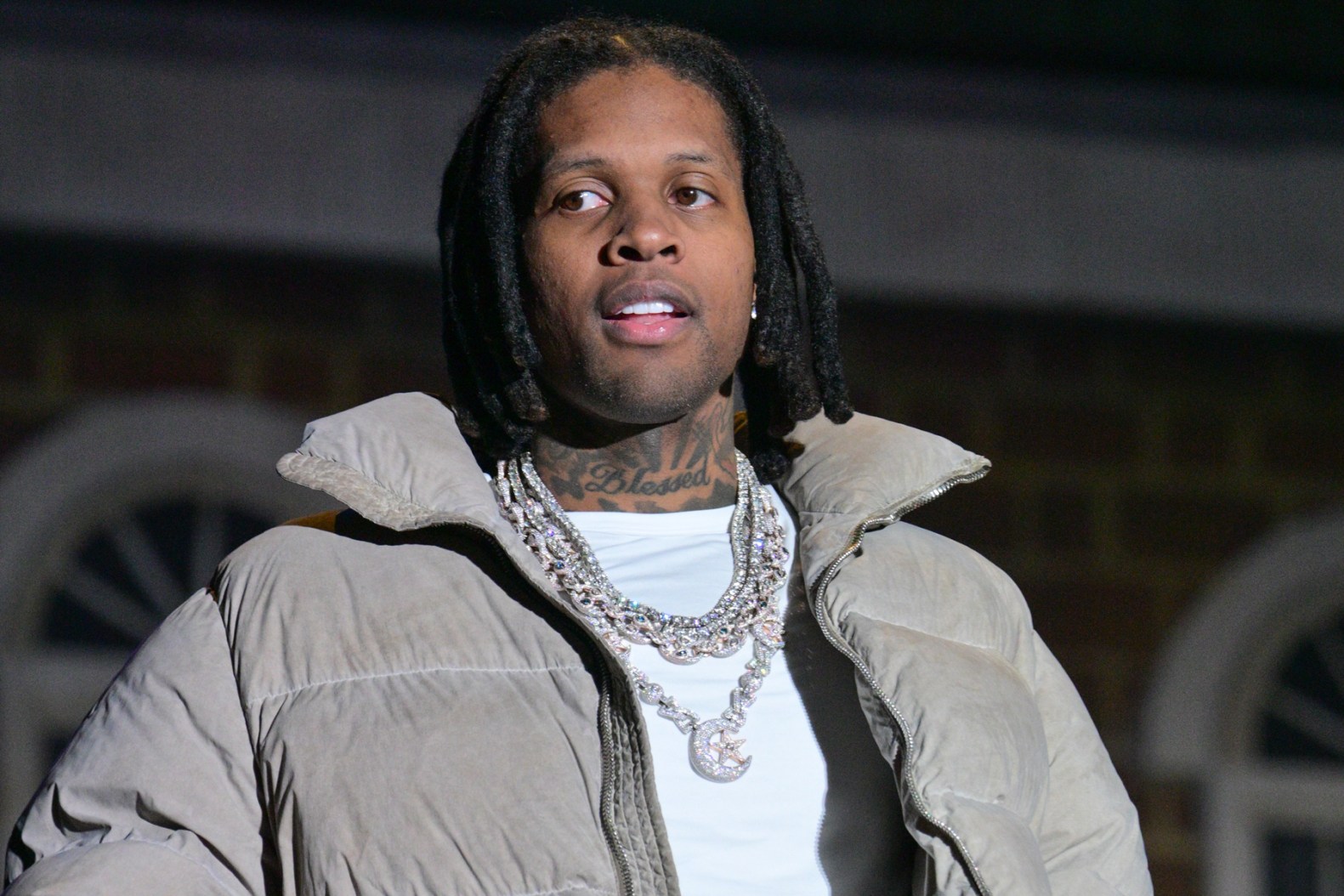
Grammy winning rapper Lil Durk was present in a federal courtroom in Los Angeles on Wednesday as a judge agreed to postpone his murder for hire trial by at least three months after several of his co defendants requested more time.
The group asked that the trial be moved from its original Jan. 20 start date to May 4, though the judge declined to lock in a specific schedule due to conflicts on the court calendar. He said proceedings could begin as early as April 21 or April 28. Attorneys continued to discuss possible dates following the hearing. Three of Durk’s five co defendants told the court they needed extra time to review evidence and prepare their defense. Durk did not take part in the request.
“We would have been ready to try the case (in two weeks), but the court appropriately decided that with everybody together, we still aren’t there yet,” Drew Findling, one of Durk’s lawyers, tells Rolling Stone. “It’s a complex case. These are the stepping stones towards a trial.”
Durk, whose legal name is Durk Banks, appeared before the court with a closely cropped haircut rather than his familiar dreadlocks. He blew kisses toward his wife, India Royale, who was seated in the gallery. His attorneys told the judge that Banks has been held in solitary confinement without a disciplinary hearing since he was allegedly found with an Apple Watch last August. They said he spends 23 hours a day alone in a small cell without visits and raised concerns about his mental health. The judge scheduled a status hearing on the matter for Feb. 9.
Banks, 33, has pleaded not guilty to allegations that he put up a bounty for the killing of Tyquian Terrel Bowman, a Georgia rapper known as Quando Rondo. Prosecutors say the alleged plot led to an armed ambush at a gas station near the Beverly Center mall that resulted in the death of Bowman’s cousin on Aug. 19, 2022. Authorities claim Banks targeted Bowman because he believed the rapper was responsible for the 2020 shooting death of his friend and protégé Dayvon “King Von” Bennett.
Through his legal team, Banks has denied paying anyone to carry out the attack. Prosecutors allege the shooters fired 18 rounds from multiple firearms, including a machine gun, killing Bowman’s cousin Saviay’a Robinson near a black Escalade associated with Bowman. The defense has criticized the government’s case, arguing it leans heavily on the account of a cooperating witness whose story has shifted.
In a court filing, Banks’ attorneys said a man identified as “Prosecution Witness-1” initially claimed there was no bounty, that he never agreed to kill Bowman for money, “and that he did so under duress.” They said the witness later changed his account and told investigators that co defendant Deandre Dontrell Wilson stayed in Los Angeles after the shooting to collect the alleged bounty for distribution. The defense argued prosecutors must have known the witness “lied” because their first superseding indictment stated Wilson would distribute the money, a claim that was later removed from the second superseding indictment.
The defense has also pushed back on the prosecution’s narrative by presenting evidence that Banks’ 2022 song “Wonderful Wayne & Jackie Boy” was recorded months before the shooting. Prosecutors had cited lyrics from the song in their First Superseding Indictment, suggesting Banks was trying to profit from the violence. In the track, Banks raps, “Look on the news and see your son, You screamin’, ‘No, no.’” Prosecutors said the line referenced Bowman seeing Robinson’s body. At a bond hearing on Dec. 12, 2024, Findling submitted a sworn statement from the song’s producer, Justin Gibson, confirming the song was completed before the shooting. The reference to the lyrics was later removed from the Second Superseding Indictment.
Prosecutors, meanwhile, have continued to defend their case. On Wednesday, they successfully opposed a defense request for an evidentiary hearing examining why the government waited months to inform defense attorneys that a previous judge had received phone threats during an earlier phase of the case. Findling said the hearing was needed to address “lingering questions that will haunt this case.”
U.S. District Court Judge Michael Fitzgerald rejected the request, saying the situation involved “some hothead who has an interest in the music industry did something stupid.” He said the court encounters similar incidents regularly and noted there was no unresolved fact that could serve as the “basis to disqualify anyone.”
“It’s just regrettably something that happens,” Judge Fitzgerald said, referring to the anonymous threats.