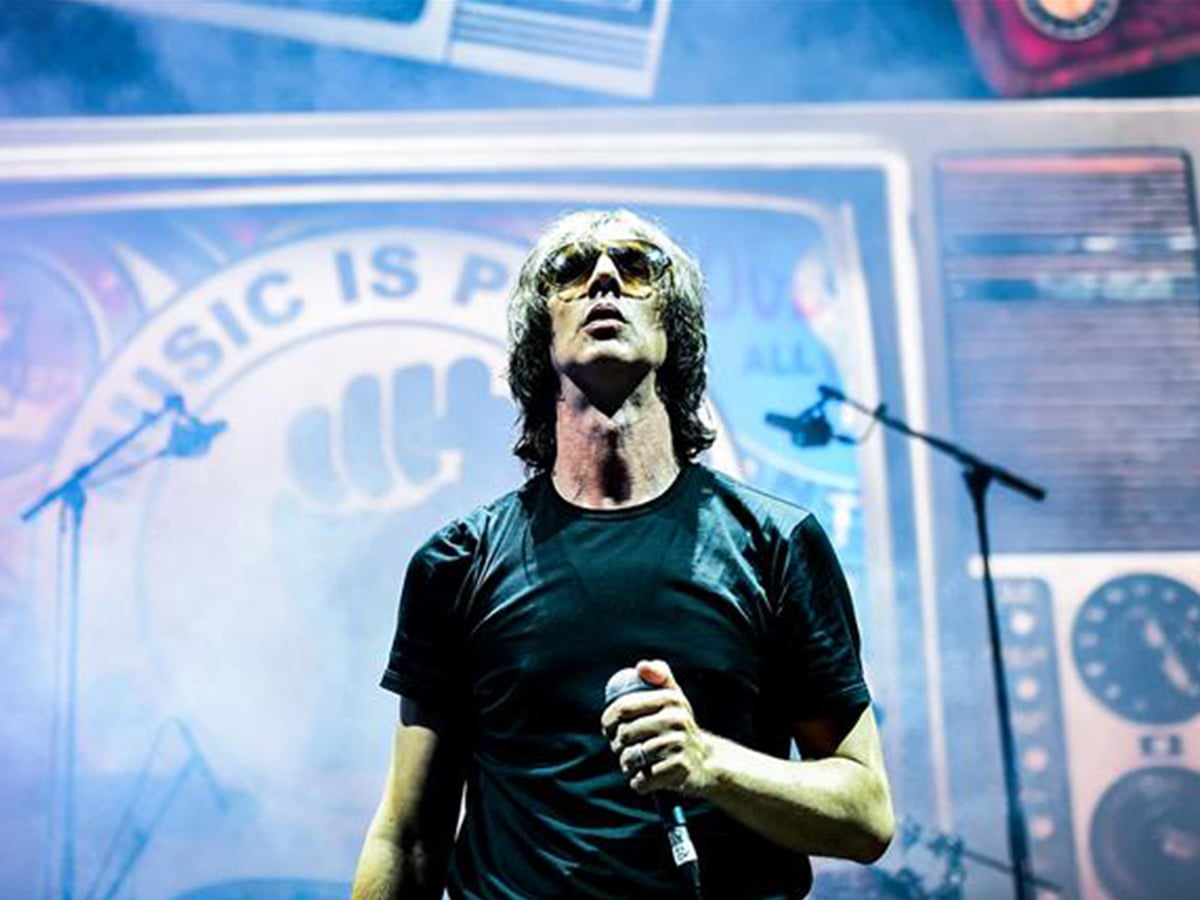
The industry's hottest female DJ since 2006.
The Story Behind Project Hail Mary Using Harry Styles’ Sign Of The Times
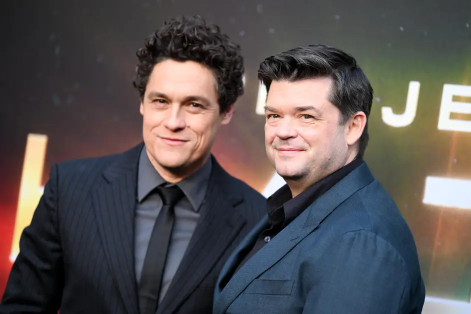
Director Chris Miller is enjoying a well deserved family trip in the Dolomites, relaxing with an Aperol Spritz while taking in the unexpected success of Project Hail Mary, the film he made with fellow director Phil Lord.
Featuring Ryan Gosling, the story follows an ordinary science teacher sent into space on a desperate mission to save humanity. The film has also achieved something just as remarkable in real life by becoming a major box office success. It has now earned $300 million worldwide, which is especially notable at a time when most hits are sequels or tied to well known franchises. Many in the industry say the last comparable original success was Oppenheimer in 2023. In some ways, the film’s surprising performance reflects the unlikely journey of its main character.
“When you’re doing something that’s a big risk at a time when things are not looking great and it works, it’s very gratifying,” Miller shared with Billboard during a Zoom call between sips of his bright orange drink, referring both to the movie and its commercial performance. “In a way, it was its own Hail Mary.”
Along with its heartfelt story, which is based on Andy Weir’s 2021 novel, and its striking visual effects, the movie also stands out for its distinctive soundtrack. The music combines memorable song choices with an original score that creates both an emotional and epic atmosphere.
“We initially had a few ideas we were circling when it came to the music,” Miller explained to Billboard. “One of them was to have music from all over the world because we wanted it to feel like a global mission with everyone rooting Ryan’s character on.” The selections included unique tracks such as “Gracias a la Vida” by Argentine singer Mercedes Sosa and “Po Atarau” performed by the Turakina Māori Girls’ Choir from New Zealand, choices guided by music supervisor Kier Lehman. “We tried using more modern tracks in it, but it didn’t ever want to stick,” Miller added.
There was one exception. One of the most powerful musical scenes comes from Sandra Hüller’s character, the serious leader of the international effort to save the planet. In a memorable moment, the team takes a break and gathers for karaoke, where Hüller performs Harry Styles’ Billboard Hot 100 top five hit “Sign of the Times.” The idea for this scene came after the directors visited a filming location.
“We went onto the USS Abraham Lincoln in San Diego and noticed that the most interesting parts of the ship were the social spaces,” Lord explained. “Some of them have all sorts of quirky things, like 15 versions of Monopoly and a karaoke machine. We were thinking, this is also a movie about social anxiety and the way our connections with each other become so valuable.”
The karaoke moment was written into the script to strengthen the emotional storytelling, although Hüller’s character was not originally meant to perform. Gosling later shared on The Tonight Show Starring Jimmy Fallon that just days before filming, he unexpectedly heard Hüller singing in her dressing room. “I heard the voice of an angel and I was like, ‘What is that?’ I went down the hallway and said, ‘You can sing? Please sing in the movie.’ And she was like, ‘I’ll think about it.’”
Lord later said that Hüller agreed to do the scene with one condition. “She said, ‘I’ll do it, but only if I get to pick the song.’” The team prepared themselves for anything, but she chose “Sign of the Times,” a song she often sang with her daughter. However, time was tight. The crew only had 36 hours left filming aboard the ship in London, leaving very little time to rehearse or secure the rights to such a major hit, especially with the time zone challenges. Gosling joked to Fallon about the situation, saying, “Can you choose an easier song to clear?”
ADVERTISEMENT
“We spent over a month getting ready to film that scene, pre recording everybody and overpreparing with options,” Lehman explained, before the unexpected song choice changed everything. “I knew it wasn’t going to be easy, so we immediately jumped into it.” Their first step was contacting Universal Music Publishing, which represents Styles. Producer Amy Pascal also stepped in, along with Jody Gerson, chairman and CEO of Universal Music Publishing Group. “She got in touch with Harry and told him what a special movie it was going to be.”
At the very last moment, they managed to secure permission for the song. “Just in time for her to sing, but just barely,” Lehman said. “There was no prep for her.” Lord added that Hüller only performed it twice on camera. “We also didn’t tell anybody there what she was going to do, so those reactions are genuine reactions from the cast who didn’t even expect her to show up.”
As Gosling told Fallon, “It became the anthem of the film,” and he even performed it for Harry Styles during a recent appearance hosting Saturday Night Live. By coincidence, Styles was also promoting his Billboard 200 chart topping album Kiss All The Time. Disco, Occasionally around the same time as the film’s release. “It’s one of those incredible moments,” Lehman said, noting how lyrics such as “We gotta get away from here” perfectly matched the emotional build up before Gosling’s character launches into space. “I think it comes from leading with the creative first and not being afraid to take a chance on the right song, even though the backend part of the process wasn’t the ideal situation for my position as a supervisor,” Lehman admitted.
Along with securing the Styles track under pressure, Lehman also faced the challenge of getting approval for a Beatles song. The original novel is filled with Beatles references, many of which made it into the film. Even the capsules Gosling’s character sends back to Earth are named after members of the legendary band. Because of this, the team hoped to include at least one Beatles song, even though licensing their music is famously difficult and costly.
“There were some interesting covers that we had tried from early on because we assumed we never would be able to actually get one in,” Miller explained. Among the early options were David Bowie’s version of “Across the Universe” and Cat Stevens’ take on “Here Comes the Sun.” Eventually they focused on two songs: “Don’t Let Me Down” for the closing credits and “Two of Us” for an important late scene. Lehman described the process as detailed and demanding. “The first thing I was told was that it’d be very expensive, and they’d need a lot of information in order to make a final decision.”
To help secure approval, the filmmakers provided scripts, an early cut, and later the finished version of the scene so decision makers could fully understand how the song would be used. This approach ultimately led to approval. “Our producing partner Aditya Sood pitched ‘Two of Us,’ and when we included it, it fit it so perfectly,” Miller said, noting that while the song reflects the friendship between John Lennon and Paul McCartney, it also mirrors the emotional bond between Gosling’s character and the alien he forms a connection with.
With those songs confirmed, the rest of the musical world of the film was built around a score by Daniel Pemberton, who previously worked with Lord and Miller on Spider Man: Across the Spider Verse. “I wanted to make something that felt magical and strange, that captured both the awe and wonder of the universe as well as what it would be like to communicate with an alien being who turned out to be kinda fun,” Pemberton told Billboard. Miller added that they wanted Gosling’s character to never feel isolated. “That’s why there were a lot of choral elements in the score; like children stomping and clapping.”
Pemberton also used some creative recording techniques, including bringing real schoolchildren into Abbey Road Studios as a reference to Gosling’s character being a teacher. “We had the kids playing a lot of the percussion parts using their bodies, stomping on the floor, clapping and slapping,” Pemberton explained. He also incorporated a Cristal Baschet from the 1950s, an instrument made of glass and metal that is played with water. “There are so many unique sounds,” he said.
“A lot of a movie’s success depends on people feeling engaged and holding their attention for the length of a concert,” Lord said. “A big part of that is having beautiful music in it. Over time, I think we managed to find the right rhythm to keep everyone locked in and that’s why you’re finding people leave the theater, telling their friends and wanting to see it again.”
COMMENTS
You Might Also Like
ADS

Editor's Choice

.jpg)
.jpg)