The industry's hottest female DJ since 2006.
Madra Salach Reshape Irish Folk Music With Their Bold Sound
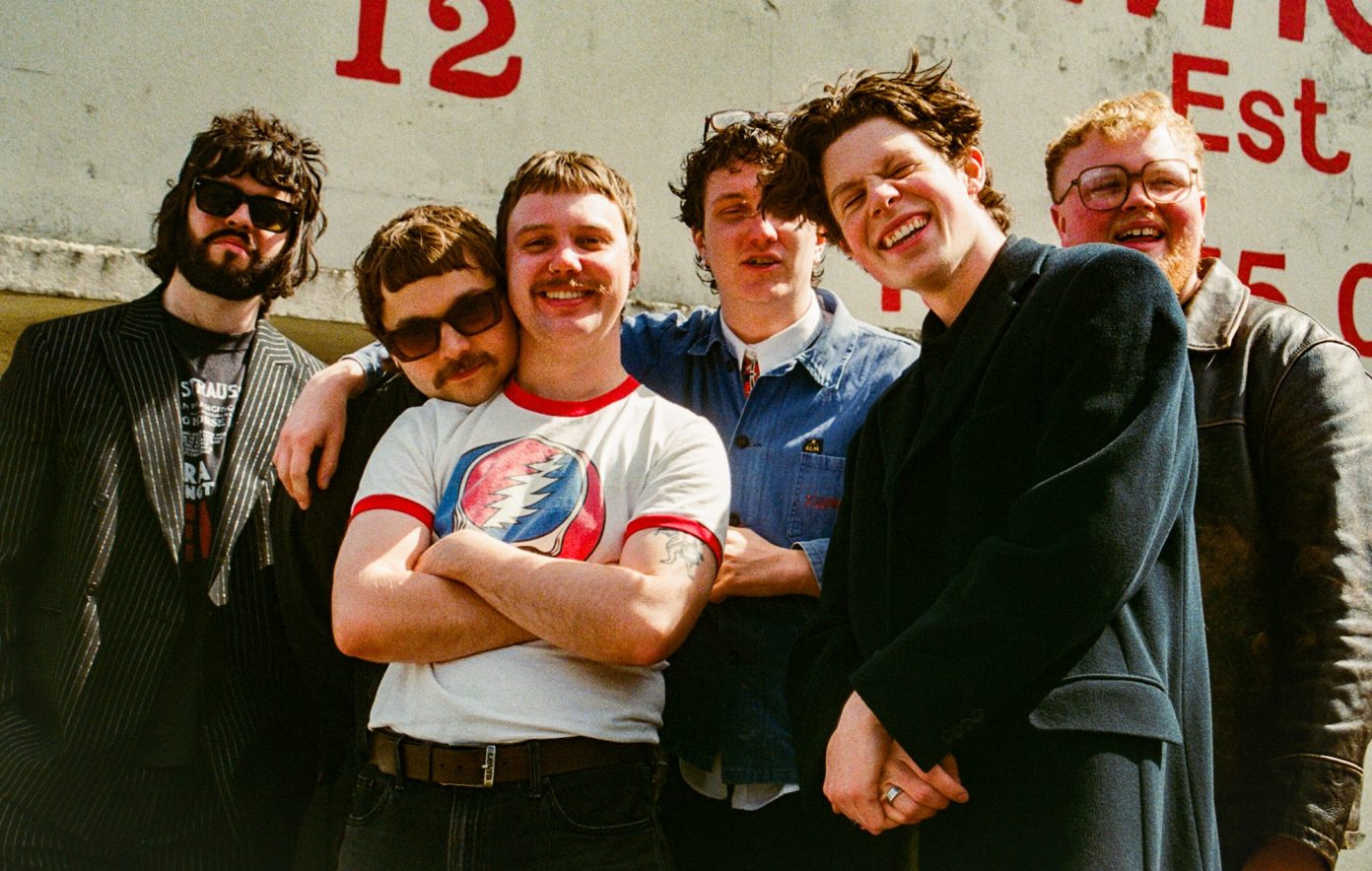
The biggest impact at this year’s new music showcase The Great Escape came from performers drawing on material that reaches more than 100 years into the past. Inside the packed basement of Chalk in Brighton, Dublin six member group Madra Salach delivered a fierce, punk charged interpretation of traditional Irish songs from the 1950s, including ‘Murphy Can Never Go Home’, and the 1870s, such as ‘Spancil Hill’. Stories about immigrants longing for home sat alongside the band’s own compositions, connecting experiences of sorrow, affection and absence.
The concert reached its emotional peak with final number ‘The Man Who Seeks Pleasure’. Building gradually into a powerful release led by singer Paul Banks, the track explores the damaging connection between enjoyment and suffering. Although mandolin player Jack Martin composed it in his bedroom only a few years ago, its weathered perspective, much like the wider philosophy behind Madra Salach, could belong to almost any period.
During one of the group’s uncommon free days in Dublin, Banks reflects on the song while talking with NME alongside Martin. “The thing that I like about that line (“For the man who seeks pleasure, is the man who seeks pain”) is that it’s not saying anything new,” considers Banks. “It’s a behavioural pattern that a lot of people are stuck in that’s been summed up into a sentence that I can then scream over a drone, which then feels cathartic for me and seems to be cathartic for people watching. For a long time when we were gigging it, I’d almost always get too close to the line emotionally, and I’d be really dysregulated for an hour after the show. And I think that speaks to…” He pauses briefly before adding: “I like to think there’s something special about that song.”
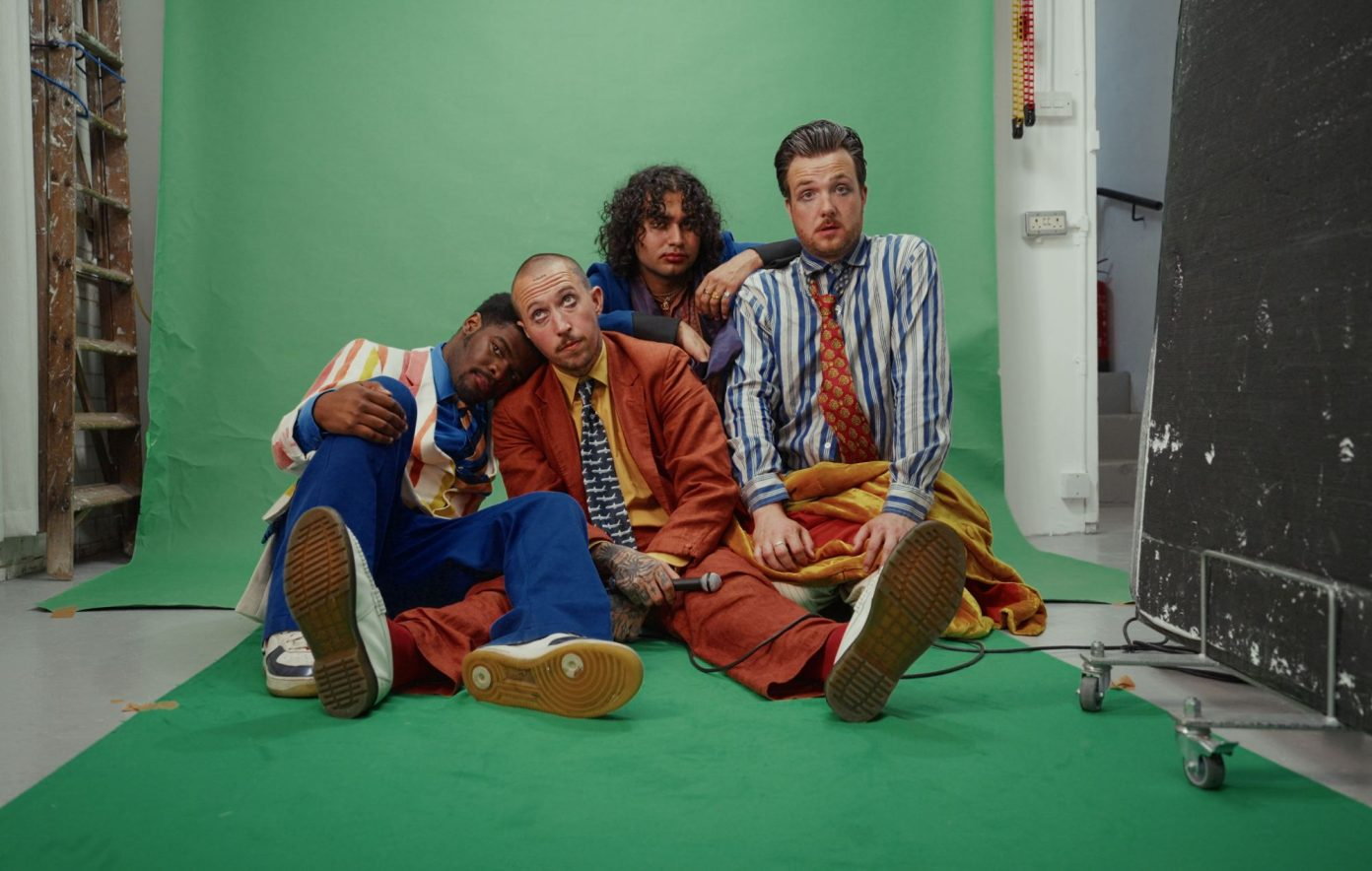
The force of that final sequence is only part of what has turned the musicians into one of 2026’s essential emerging acts. Alongside Banks and Martin, the lineup features guitarist Adam Cullen, bassist Jack Lawlor, drummer Dara Duffy and harmonium player Maxime Arnold. Just 12 months ago, Madra Salach had never appeared at a festival beyond Ireland. This year, their schedule includes roughly 30, ranging from a supporting appearance at Kneecap’s London all day event, where their merchandise seemed to be everywhere, to major performances at Green Man, TRNSMT and Electric Picnic.
Banks remains amazed by how quickly the project has grown. “The fact that it’s having this much commercial success is blowing my mind, because my hopes for this project were to find our own little pocket in the niche folk revival so we could play small rooms in Dublin,” he says.
Since Madra Salach formed in 2023, however, the group has refused to follow a single musical path. Banks and Martin both describe its origin as “blurry”. One part began with Banks and Duffy performing during open nights at their neighbourhood pub, The 1884, where they covered The Pogues and The Dubliners in sessions where “you were there to play drinking music”.
Another part emerged through Martin, whose grandfather served as president of SIPTU, Ireland’s largest union. He suggested creating updated versions of historic workers’ songs with ambient drones and tape loops. “I grew up hearing those songs and, as I got older, I understood the context a lot more,” Martin recalls. “Usually people’s grandparents have photos of Jesus on the walls, but mine had [trade union leader] Jim Larkin. Jim Larkin is my granddad’s Pope.”
Eventually, those separate ideas came together. Madra Salach’s first EP, January’s ‘It’s A Hell Of An Age’, borrowed its name from a lyric in ‘Murphy Can Never Go Home’. Its relevance today also captures the group’s approach to combining heritage with contemporary expression. “The fact that, 80 years on, it’s still so relevant made sense to us in terms of what we’re trying to say with folk music: that it’s rooted in history and tradition, but we’re absolutely making music for now,” says Banks. “I think the centre of the folk ethos is that it’s just human stories – stories of individuals as opposed to the history book stories of battles and conquerors and kings. It’s a people’s oral history, so as long as you’re writing from a place of truth, everything else can follow.”
“Folk is a people’s oral history, so as long as you’re writing from a place of truth, everything else can follow” – Paul Banks
For the group, this involves reshaping familiar concepts and presenting them “like you would in a standard guitar band, but the instruments are different, and the songs are different,” Banks explains. With their attention firmly placed on making each concert as effective as possible, the musicians have noticed their songwriting developing “more teeth” at the same time. “We haven’t had a chance to really cement a new body of work yet, but the new songs we’re writing are such live songs that are so structured around a performance with energy,” he notes.
Artists such as Lankum have already helped traditional Irish folk reach more listeners, giving Madra Salach greater freedom to explore the style from their own perspective. “I think we’re very lucky that we’re not having to plot this course on our own. People have the context. We don’t have to pander too much to like, swilling pints of Guinness and wearing big jumpers because other bands have showcased that, culturally, we have a lot more to offer than that – even though I love big jumpers and Guinness,” the singer laughs. “We jumped on the bandwagon, and it’s going great!”
Madra Salach’s appeal, however, comes from the unmistakable conviction behind every sound they create. That sincerity runs through the original compositions on ‘It’s A Hell Of An Age’, particularly the raw sorrow of ‘I Was Just A Boy’, which carries forward the spirit of the traditional music that influenced them. It can also be felt in the command and intensity that have made their concerts some of this summer’s most important performances to catch.
Banks believes audiences immediately recognise whether a performer truly connects with the material. “It’s funny, because I could do all the same noises and movements that I do, but people have really highly-tuned bullshit detectors, and if I didn’t mean it, they’d be like, ‘Ah, this guy’s fucking putting it on’,” he says. “So I really try to go to the emotional centre of the songs and stay with it, and I find that to be one of my favourite things about singing – just inhabiting that place. The shit I hate is loading in and doing soundchecks, but getting emotional? I’d be doing that anyway, so I’m more than happy to do it on the stage.”
Madra Salach are scheduled to perform at Green Man Festival on August 20. Full concert listings and ticket information are available through the band’s website.]()
COMMENTS
You Might Also Like
ADS

Editor's Choice